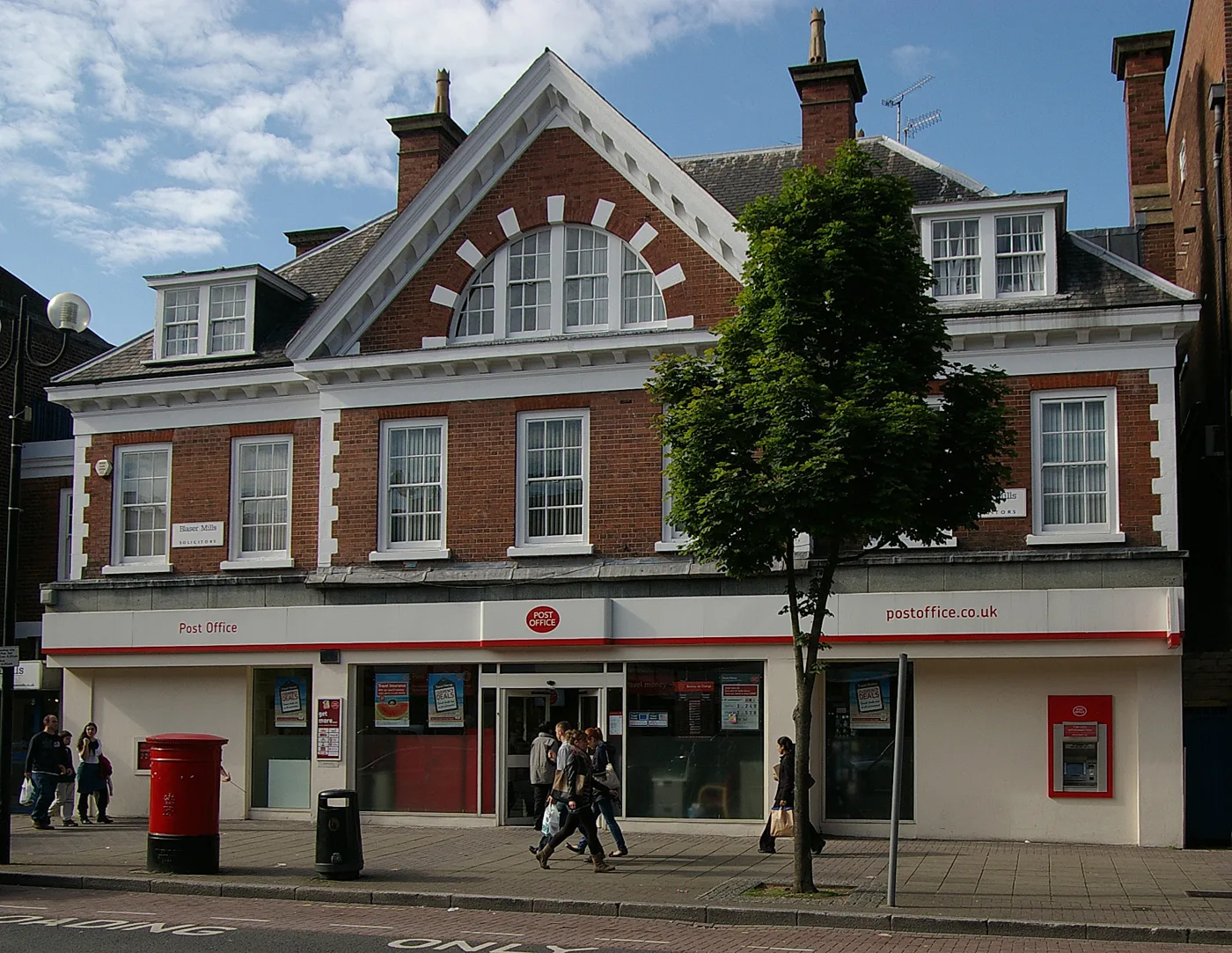

Councillors voted 5-2 for a 10-storey, 104-room co-living block behind the old Harrow Post Office on College Road. The affordable housing payment is £161,000.
Harrow’s old Post Office on College Road is set to become the front door of a 10-storey co-living block with 104 rooms. The Planning Committee approved the scheme by five votes to two at a special meeting on Tuesday 6 October.
The decision is recorded in the committee’s published minutes. Permission is not issued yet. It waits on a Section 106 legal agreement, which the council has given until 6 January 2027 to complete.
The quick answer
- What: 104 studio rooms for rent in a “co-living” building, with shared kitchens and lounges, at 12-14 College Road, HA1 1BE.
- How big: a new block of five and ten storeys behind the retained three-storey Post Office building.
- Affordable housing: none on site. The developer pays £161,000 towards affordable homes elsewhere.
- Parking: car-free, apart from one disabled bay. Residents cannot get parking permits.
- Vote: five councillors for, two against.
What was approved
The applicant is Urbane London, with Carter Jonas as agent. The application is PL/0127/26 on the officers’ report; the minutes print it as PL/0126/26.
The Post Office building would be refurbished and kept. Its rear two-storey extensions would be demolished. The report says the plans include:
- a ground-floor café and an event or co-working space, open to the public on weekdays
- co-living rooms on the first and second floors of the old building
- a new block to the rear, part five and part ten storeys, mostly brick
- 104 rooms in total, 11 of them accessible
- 63 cycle parking spaces and one disabled parking bay
- a landscaped yard at the back with a walking link to Havelock Place
Rooms range from 17 to 28 square metres, with an average of about 23.6. The London guideline is 18 square metres, with an en-suite shower room and a kitchenette in each. Two rooms in the old building fall just below it, at about 17 and 17.7 square metres.
Who it is for
Co-living is what planners call large-scale purpose-built shared living. It is rented, managed by one operator, and sits outside the normal housing classes.
The legal agreement would cap the building at 104 residents. Every tenancy must run for at least 90 days. The building cannot be used as a hotel, a hostel or short-term holiday lets, and no room can become a self-contained flat.
For housing targets, the council counts 1.8 co-living rooms as one home. So the 104 rooms count as about 58 homes. That is about 18% of the minimum 323 homes the Local Plan expects across the wider Havelock Place site, known as OA4.
The affordable housing row
London Plan policy expects co-living schemes to pay towards conventional affordable homes. The developer’s viability assessment said the scheme would run at a deficit and could pay nothing.
The council’s own independent viability adviser disagreed. It concluded the scheme could afford £161,000, and officers accepted that figure. The officers’ report says the contribution falls “materially below the policy expectation”. Early and late reviews would let the council claim more if the finances turn out better.
The council’s 2024 Local Housing Needs Assessment does not identify a specific need for co-living in Harrow. The officers’ report says it points instead to “a significant need for larger family accommodation”. Officers gave that conflict “moderate adverse weight”, but recommended approval because of the homes, the reuse of the empty building and the regeneration of the site.
How the vote went
Councillor Peymana Assad moved refusal, arguing the scheme failed London Plan policies H16 and D3 and Local Plan policy HO9. The reasons, as minuted, were:
- no affordable homes on the site, and a payment well below what policy expects
- no evidence of a local need for this kind of housing
- the intensity of 104 rooms, the 10-storey height and rooms below 18 square metres
Councillor Angella Murphy-Strachan seconded the motion. It was lost.
Councillors Marilyn Ashton (chair), Anjana Patel, Christopher Baxter, Philip Benjamin and Norman Stevenson then voted to grant permission. Councillors Assad and Murphy-Strachan voted against. An objector and the applicant’s agent both spoke at the meeting, which can be watched on the council’s webcast page.
What else the legal agreement secures
The officers’ report lists these obligations:
- £161,000 towards affordable housing, with viability reviews
- about £27,936 in carbon offset payments, to be recalculated after construction
- a £10,000 travel plan bond, plus about £6,550 in monitoring costs
- a payment towards street trees or greening, because the scheme falls short of the 0.4 urban greening target
- a private bin collection for the life of the building, so it does not use the council’s service
- an employment, skills and training plan, and a local procurement strategy
On top of that, the scheme is liable for provisional Community Infrastructure Levy payments of £276,420 to the Mayor and £253,385 to the council.
The building
The report describes 12-14 College Road as a locally listed building from between 1914 and 1935. Its value lies in its Queen Anne Revival frontage and its part in Harrow’s Metro-land growth. It was purpose-built as a Post Office and is now empty. The council’s conservation officer did not object, subject to conditions on the front elevation.
Most of the site, including the old building, sits outside the town centre’s tall building zone. Part of the land behind it is in a zone where the Local Plan says buildings of up to 18 storeys may be acceptable.
The council wrote to 1,340 nearby addresses in January. It received three objections, and one was later withdrawn. Objectors raised the height, loss of light and privacy, noise from communal areas, rubbish and rats, and strain on local services.
Also on the agenda: John Lyon School’s West Street plan withdrawn
The same meeting was due to look again at Le Beau House, 76 West Street, Harrow on the Hill (PL/2559/25). The plan is to turn the offices into teaching space. The committee approved it in June, but the case came back after the Harrow Hill Trust queried the transport assessment.
The minutes say the proposal would add 67 students, taking John Lyon School to 667. The application was withdrawn from the agenda on the night. The Chief Planning Officer said late objections about transport had arrived, and officers needed time to consider them.
What it means for you
- Nothing changes on College Road yet. The permission is issued only once the legal agreement is signed. If it is not done by 6 January 2027, officers can refuse the scheme instead.
- If you live nearby, the planning conditions cover construction impacts, noise, servicing and waste. Details are in the officers’ report.
- If you rent in Harrow, these are managed rooms on tenancies of at least 90 days, not flats. Officers said they would be “generally affordable” next to other rented options. Policy keeps co-living schemes at least 250 metres apart, so another one is unlikely to be allowed close by.
- To follow the case, search PL/0127/26 on the council’s planning register. Our Harrow planning news page tracks the bigger decisions, and our report on the HMO Article 4 direction covers the council’s rules on shared houses.
Have your say