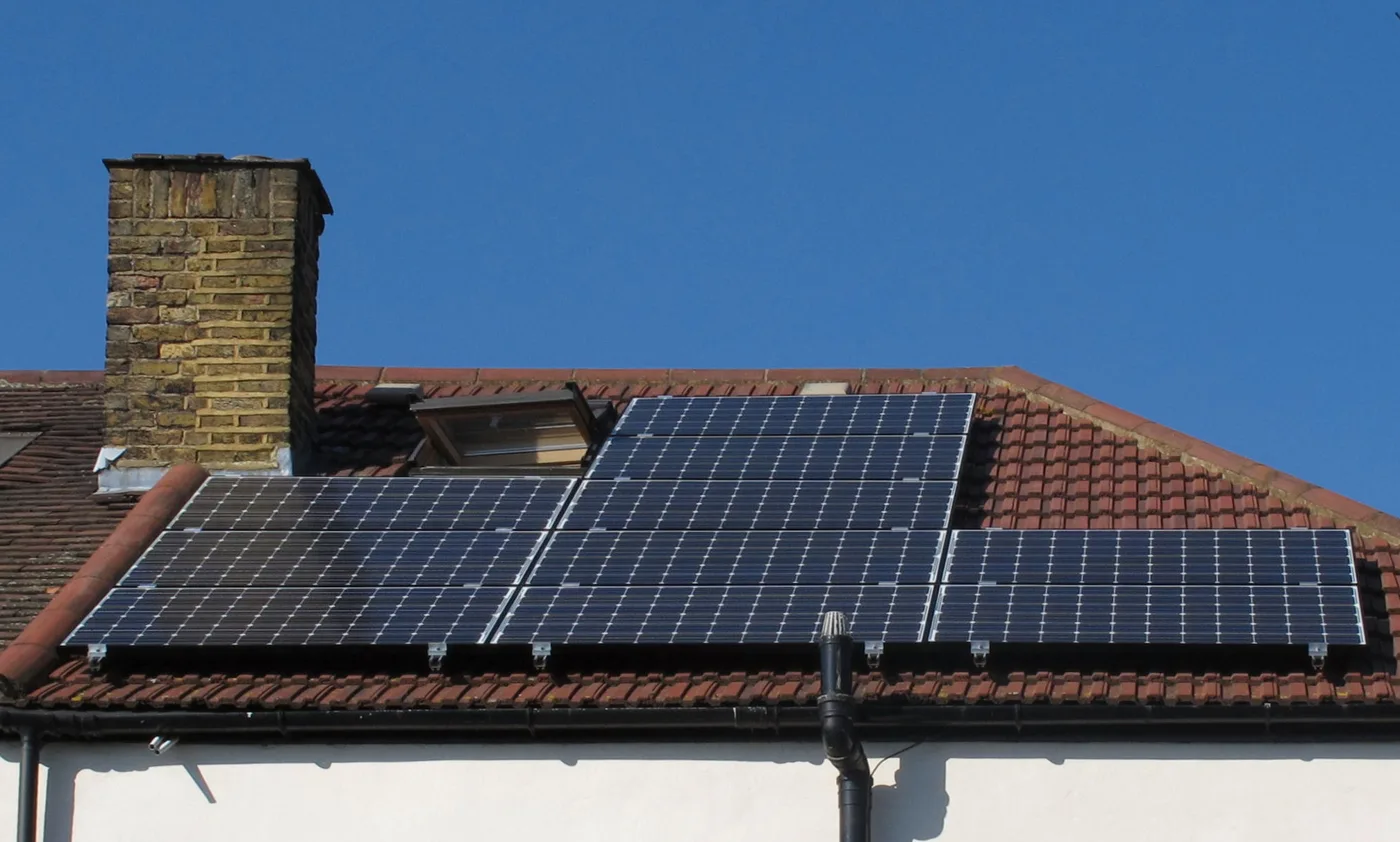

Harrow Council's group-buy solar scheme shuts to registrations on 25 September 2026. Typical market price £7,500, 0% VAT to March 2027, plus what export pays.
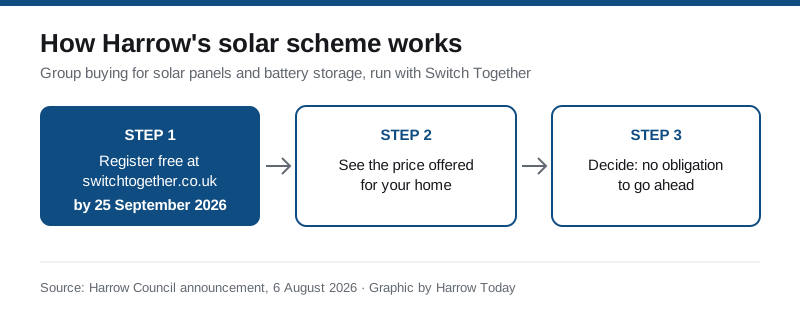
Harrow Council has opened a new round of its solar panel and battery storage scheme, and residents who want a price for their own roof have until 25 September 2026 to register. Signing up is free, carries no obligation, and is done at switchtogether.co.uk, the council announced on 6 August.
The scheme is a group-buying arrangement: “The scheme brings residents together to secure better prices. That means the more residents who take part the greater the buying power is,” the council says. It is administered by the council’s partner Switch Together, which negotiates deals with what the council describes as “trusted, vetted installers”, using an approach it says has already helped thousands of households across the UK.
The process after registering is deliberately low commitment. In the council’s words: “Simply sign up, see the price that’s offered, and decide from there whether it’s right for you.”
Alongside the panels themselves, the scheme offers battery storage. The council’s case for it is that a battery lets you keep the electricity your panels generate during the day and use it in the evening, so less of your power comes from the grid and you are less exposed to future price rises.
Cllr Pritesh Patel, the council’s portfolio holder for cleaner streets and public safety, said: “Rising energy costs and climate change are a real concern for many residents, and this scheme gives people a practical way to do something about it.” The council says the initiative is part of its climate strategy.
What Harrow Council solar panels actually cost
The council does not publish a price, because the whole point of a group buy is that the price is set later, once it knows how many households are in. The only figure either party puts in writing is Switch Together’s own benchmark: “The typical market price for solar panels is around £7,500”, against which it says group-buying customers “could pay less”. Treat £7,500 as the number the scheme is trying to beat, not the number you will be quoted.
Two things change that arithmetic and neither comes from the council.
You pay no VAT at all, for now. HMRC zero-rated the installation of solar panels in residential accommodation from 1 May 2023, and extended the same zero rate to electrical storage batteries from 1 February 2024. That relief runs to 31 March 2027, after which these supplies revert to the reduced rate of 5%. A quote taken through this round and installed before that date carries no VAT on the panels, the battery or the labour.
You get paid for what you export, but only with the right paperwork. Every large supplier has to offer a Smart Export Guarantee tariff. Octopus, to take a published example, pays a flat 4.1p per kWh on its SEG tariff, or 12p per kWh on its Outgoing tariff if you also buy your electricity from it. To qualify at all your system must be certified under the Microgeneration Certification Scheme or FlexiOrb, your total installed capacity must be no more than 5MW, and you need a meter capable of half-hourly export readings, which in practice means a smart meter.
That MCS certificate is the thing to check before you accept a group-buy offer. It is not optional paperwork: without it no supplier will pay you for a single exported unit, whatever the panels cost.
Planning permission in Harrow: the rules changed on 27 August 2026
Roof-mounted panels on a house are usually permitted development, but the limits were rewritten this summer and the current version is stricter in some places and looser in others.
On a pitched roof the equipment “should project no more than 200mm from the roof slope”. On a flat roof “the highest part of the solar PV equipment cannot be more than 600mm higher than the highest part of the roof”. On a wall, balcony or roof enclosure abutting a highway the limit is 0.2 metres beyond the plane of the wall, and 0.4 metres elsewhere. Plug-in solar equipment must not go on a wooden wall, balcony or enclosure, or anything clad in timber.
Three situations take you out of permitted development entirely, and Harrow has plenty of all three:
- In a conservation area or a World Heritage Site, panels must not be fitted to a wall, balcony or roof enclosure that fronts a highway.
- Listed buildings. Panels must not be installed on a building within the grounds of a listed building, and listed building consent is a separate requirement from planning permission.
- Scheduled monuments. Panels must not go on a designated site.
Two conditions apply in every case: the equipment must be sited “so far as is practicable, to minimise the effect on the external appearance of the building and the amenity of the area”, and it must be “removed as soon as reasonably practicable” when no longer needed.
If your house is in one of the borough’s conservation areas, establish that before the survey rather than after it. A group-buy offer is priced on a straightforward install, and a planning application is neither straightforward nor quick.
What it means for you
If you are curious but not committed, registering is the whole first step: it costs nothing, and the offer you receive sets out what solar panels and battery storage would cost for your property before you decide anything. The one hard date is the registration deadline of 25 September 2026.
On planning permission, roof-mounted solar panels on houses can often be installed as permitted development, without a planning application, though the Planning Portal notes there are “important limits and conditions” and that local rules can differ, so check its guidance for your property type before committing. For what is currently moving through the borough’s own register, see our Harrow planning news page.
If you miss the window, this is a repeating scheme: the council describes the current round as “a new round” of the programme, so registration periods do come back. But an installation ordered through this round starts with registering before the September deadline.
Sources
- Save more with Harrow’s solar panel scheme, Harrow Council, 6 August 2026 for the 25 September deadline, the quotes and the registration route.
- Switch Together, solar panels for the £7,500 typical market price and the four-step process. The scheme is run by iChoosr Limited.
- VAT on energy saving materials, HMRC Notice 708/6 for the zero rate from 1 May 2023 to 31 March 2027 and the battery zero rate from 1 February 2024.
- Octopus Energy, Smart Export Guarantee for the 4.1p and 12p per kWh rates and the MCS, capacity and half-hourly metering conditions.
- Planning Portal, solar equipment mounted on a house or a block of flats for the permitted development limits that apply from 27 August 2026.
Have your say